How to play
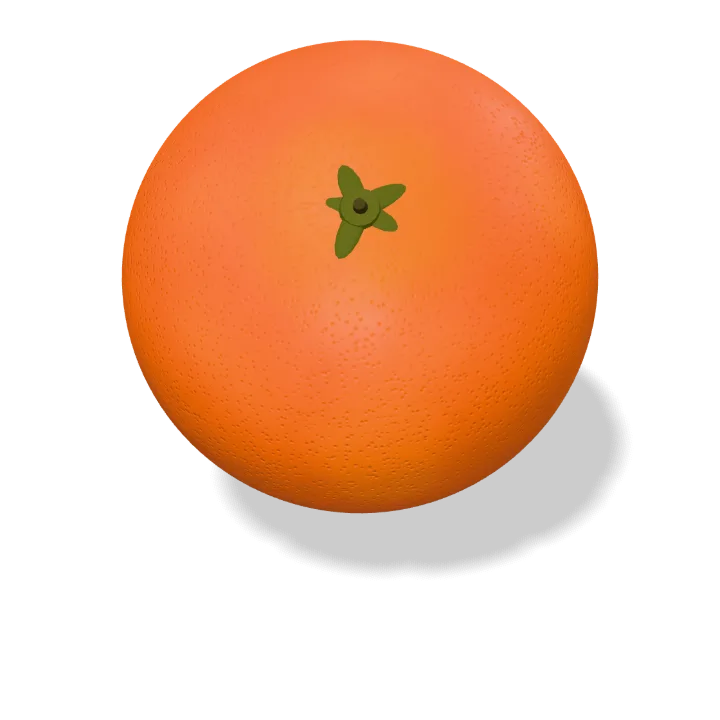
On a phone, use one finger. On a computer, hold the left mouse button and drag. The mandarin is drawn in 3D: start at the stem on top and spiral down to the bottom to take the whole peel off in one strip.
- Press Start and the game opens full screen. Close it with the × at the top right, the Esc key or your phone’s back button. If you close it while peeling, that round is not recorded.
- Put your finger inside the ring around the stem. The stem pops off and you have hold of the end of the peel.
- Without lifting your finger, drag the way you want to go. The end of the peel follows your finger and a strip about 1.2 cm wide comes off. The fruit turns by itself to keep the end of the strip in front of you, so if you keep your finger a little ahead of the strip, the fruit keeps turning and peeling. The farther ahead your finger, the faster you pull.
- Work your way down a little at a time, staying just below the last lap, so that little peel is left between laps.
- When the Tension bar reaches the red zone at its right end, the peel is about to tear. If the bar fills up, the strip tears and the round ends.
- Lifting your finger also ends the round. Reaching the area around the bottom means you peeled all the way, and the strip is laid out flat on the table.
- Your score is the area (%) of peel you took off in one strip. The torn spot at the stem and the spot at the bottom do not count. Peel length assumes a mandarin 6 cm across.
- When a round ends, your score appears on the same screen with Play again, Share result and Close. Close takes you to the result panel below, where you can submit to the leaderboard.
Why the peel tears
The game adds up three kinds of strain on the strip and shows the total on the Tension bar. A real peel snaps for similar reasons.
- Pulling too fast: the faster you pull, the bigger the force (it grows with the square of speed). Even in a straight line, keep pulling at about four times the fruit radius per second and the strip tears.
- Turning too sharply: bending a flat strip sideways forces its outer edge to be longer than its inner edge, so the outer edge stretches. The stretch is strip width ÷ (2 × bend radius): bending a 1 cm strip around a 1 cm radius stretches the outer edge by 50%. That is why the first lap around the stem (and the last one near the bottom) is the hardest, and why slow turns are safer.
- A thinning strip: crossing peel you already removed means less new peel comes off, so the strip gets thinner. A thin strip tears under less force and snaps once it is under half its normal width. Passing over the torn spot at the stem is fine.
- The tearing point varies slightly (±7%) along the peel, since real peel has weak spots too. The variation is small, so your hands decide the score, not luck.
Why the laid-out peel is an S
When a round ends, the strip is laid out flat on the table. A strip that covers the whole fruit is curled tight at one end, straight in the middle, and curled the other way at the far end: an S.
When you flatten a line drawn on a sphere, it keeps the amount it was bending within the surface (its geodesic curvature). The small circles around the stem bend a lot, so that end curls tightly; the equator is the largest circle on the sphere and lies straight; past it, the circles bend the other way and get smaller toward the bottom. Think of the lines of latitude on a globe.
If the strip tears partway, it ends in the small curl from the stem end. The result image keeps exactly this shape.
Tips for peeling it all in one strip
The best path is a spiral that starts at the stem and works evenly down to the bottom. Keep the laps one strip width apart and you can get past 90%.
- Go very slowly on the first lap: the bend radius around the stem is small, so the bending strain is high. Keep your finger close to the end of the strip, watch the bar and go around once slowly. You can speed up toward the middle of the fruit; slow down again near the bottom.
- Do not head straight down: dragging straight down from the stem and then turning hard tears the strip at the corner. Start going around the stem from the beginning.
- Stay just below the last lap: gaps between laps leave peel behind and lower your score, while big overlaps thin the strip until it snaps. Keep the new strip just touching the white edge of the last lap.
- Pausing is fine: as long as your finger stays down, you can stop for a moment. Bring your finger close to the end of the strip and the fruit stops turning and the tension drops.
- On a phone, keep your finger a little off to the side you are heading, not right on top of the end of the strip, so you can see the strip and the last lap.
What a real mandarin peel is like
Mandarin peel has two layers. The orange outer layer (the flavedo) is packed with tiny oil glands, which make the bumpy texture; fold a piece of peel and a fine spray of fragrant oil comes out. Under it is the white, spongy albedo. The white threads clinging to the segments are vascular bundles.
Most mandarins eaten in winter in Korea and Japan are satsumas (Citrus unshiu), whose loose skin comes away easily by hand. In Korea most come from Jeju, and the open-field harvest starts around October.
- Peeling a real one in a single strip: make a small hole with a fingernail at the stem or the bottom, then pull slowly and low, close to the fruit, keeping the strip the same width as you go around. A narrower strip comes out longer but breaks more easily.
- Easier fruit: a mandarin whose skin sits a little loose over the fruit peels easily. When the skin clings tightly, the strip breaks often.
- Another way: Arida-muki, named after the Arida area of Wakayama Prefecture in Japan, skips the one-piece peel. You split the fruit in half with the skin on, split it again, and peel each piece.
Leaderboard: weekly and all-time
When a round ends, type a nickname under Leaderboard in the result box to post your score. A bigger area ranks higher, and ties go to whoever posted first.
The weekly board restarts every Monday at 00:00 Korea time (Sunday 15:00 UTC); the all-time board keeps growing. Each player (name#number) shows only their best score.
- Score range: 1 to 100%, to one decimal place. Scores under 1% cannot be posted.
- Run check: the strip has a fixed width and tears if pulled too fast, so peeling an area takes time. A check value issued at the start confirms that at least 0.025 seconds per percent really passed. Each round can be posted once, within 15 minutes of starting.
- Devices differ: the game scales to the size of the fruit on any screen, but a finger, a mouse and different screen sizes are not equally easy. Treat the rankings as a bit of fun.
- Nickname: 1–12 characters using Korean (Hangul), Latin letters (including Spanish á, ñ, ü), Japanese (kana/kanji), digits, spaces, _ or -. Profanity, slurs, names impersonating the site or its staff, and web addresses are not allowed.
- #number: the first time you submit, a random identifier is created in this browser and a four-digit number is derived from it, so you appear as Alex#4821. Players with the same name are told apart by the number, and changing your name in this browser also renames the scores you already submitted. Clearing browser data or submitting from another device or browser gives you a different number.
- Public, and removal: names, scores and dates on the leaderboard are visible to everyone. To prevent abuse we also store a one-way hash of your IP address, which is deleted after 30 days. To have an entry removed, contact us at the address in the privacy policy.
- You can submit up to 30 times per hour from the same connection. Scores found to be made by cheating may be removed.
FAQ
What is a good score?
There is no official benchmark. If you keep the laps one strip width apart and never tear, you can get past 90%. A little peel always stays between laps, so 100% almost never happens.
Why does it keep tearing on the first lap?
The bend radius around the stem is small, so the outer edge of the strip has to stretch a lot. Go very slowly on the first lap, and go around the stem from the start instead of heading straight down and then turning.
Can I play on my phone?
Yes, with one finger. The game opens full screen, so dragging on the mandarin does not scroll the page. On a tablet the fruit is bigger, which makes it a little easier.
Can I stop moving in the middle?
Yes. Bring your finger close to the end of the strip and the fruit stops turning while the tension slowly drops. Lifting your finger off the screen ends the round, so keep it down.
How do I save the result image?
When the round ends, press Result image in the result box. On a phone the share sheet opens so you can save it to your photos or post it; on a computer it downloads as a PNG. The image shows the peel laid out on the table next to the peeled fruit, with your score and the date.
Where is my history saved?
Your last 50 rounds and your best score are stored only in this browser (localStorage). Only scores you post to the leaderboard are uploaded, and they are public with your nickname.
The game is slow or the mandarin does not appear.
The game uses 3D graphics (WebGL2), so it can be slow or fail to open on older devices and browsers. Close other tabs and apps, or try a recent Chrome, Safari, Edge or Firefox. The 3D graphics use the three.js library (MIT License); see the license notice.
When does the weekly leaderboard reset?
Every Monday at 00:00 Korea time (Sunday 15:00 UTC). The all-time board never resets, and both boards show only the best score for each player (name#number).
Who can see my leaderboard entry, and can I remove it?
Your name, score and date are public, so do not use your real name or contact details as a nickname. Runs you do not submit are never sent to our server. To remove an entry, email us (see the privacy policy) with your name and number (for example Alex#4821) and the board.
What is the #number after my name?
A four-digit number that tells apart players who use the same name. The first time you submit, a random identifier is saved in this browser; our server only keeps a one-way hash of it and derives the number from that. The same browser gets the same number on the Korean, English and Japanese pages, and clearing browser data or using another device gives you a new one.
Something not working, or a feature you want? Send feedback