How to play
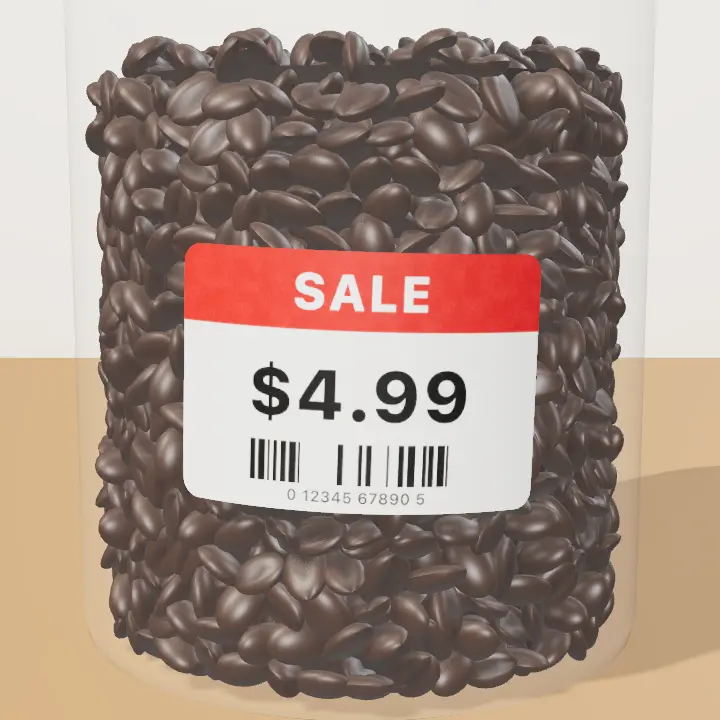
On a phone, use one finger. On a computer, hold the left mouse button and drag. A sticker on a laptop lid, a jar of honey or a parcel box is shown in 3D: lift its edge and peel it all the way off.
- Press Start on the board and the game fills the screen. The × at the top right (Esc on a computer, Back on a phone) stops the round without a score and takes you back to the page.
- Press the edge of the sticker and the end lifts a little, as if you scratched it with a fingernail. The corner with the ring is a good place to start.
- Without lifting your finger, drag it back over the sticker, folding the sticker over itself. The lifted part follows your finger and the peel line (where the sticker leaves the surface) moves forward. Once the peeled part gets long, your hand follows the peel line for you.
- Watch the Pull bar and keep an even speed. Green is clean, yellow leaves residue, the red zone at the right end means it is about to tear, and grey means you are too slow.
- Lifting your finger pauses the peel. Press the lifted end again to carry on.
- The round ends when the sticker is all off or when it tears. The peeled sticker is then laid next to the spot where it was, and that scene becomes your result image. Below it, Play again starts a new sticker right away, Share result opens the share options and Close takes you to the result box on the page.
How the score works
Score = area peeled in one piece (%) − residue left (%). It runs from 0 to 100, to one decimal place.
Peel it all off in one piece and the peeled area is 100%. If it tears, only the piece in your hand counts. Residue is the white paper fibres left on the surface (counted at full area) plus glue (counted at 0.6 of its area).
The labels in the result (Spotless 99+, Almost clean 95+, Pretty clean 85+) are this site’s own bands, just for fun.
Why it tears or leaves residue (game rules)
The game works out the force on the peel line from four things and shows it on the Pull bar.
- Peel angle: the force is lowest when you fold the peeled part back low over the sticker (close to 180°). Pulling straight up (90°) takes about 1.7 times as much, and pulling away from the sticker takes several times as much.
- Speed: the faster you peel, the higher the force (it grows with the square of speed). The speed part doubles at 2.6 cm per second for paper stickers and 4 cm per second for vinyl. A sudden yank spikes the speed and leaves residue or a tear right there.
- Strong glue spots: each sticker has a few spots where the glue holds 1.3 to 1.5 times as hard. The bar rises there even at the same speed, so slow down as you pass them.
- Too slow: peeling slower than 6.5 mm per second (7 mm for vinyl) stretches the glue into strings that stay behind in lines along the peel line. Stopping and starting often leaves a little there too.
- Paper stickers leave white fibres once the force passes 66% of the tearing point, and tear when it reaches it. Vinyl stickers can take about twice as much before tearing, but pulling hard leaves glue behind.
Tips for peeling it clean in one piece
What decides the score most is the start, the angle and an even speed.
- Go very slowly for the first few millimeters: while the lifted end is short, the peel angle is steep and the force is high. That is why paper stickers tear right at the start.
- Fold it back over the sticker: keep your finger ahead of the peel line, over the part that is still stuck. Dragging outward makes the angle worse.
- Keep one speed: once you find a speed that keeps the bar green, stay with it to the end. Stopping and starting leaves lines.
- Do not change direction suddenly: the peel line turns slowly toward your finger. A sharp turn peels one end all at once and spikes the force.
- Big labels take time: the parcel label takes more than 10 seconds to peel. Do not rush, and slow down at each strong glue spot.
Removing real stickers and labels without residue
As in the game, the basic method is to peel slowly, folding the sticker back low over itself. When it will not come off or leaves residue, these common methods help.
- Warm it up: 30 seconds to a minute of warm air from a hair dryer softens the adhesive so the sticker comes off more easily. Keep the dryer moving, and use low heat for a short time on plastics and electronics.
- Labels on glass jars: soak the jar in warm water with a little dish soap. Paper labels swell and come off along with much of the glue.
- Glue left on glass or metal: rub on a little cooking oil, leave it for a few minutes, wipe it off, then wash the oil away with dish soap. A cloth with rubbing alcohol also removes it well.
- Scrape with a plastic card: knives and metal blades scratch coated and painted surfaces. Push the residue off gently with a fingernail or a plastic card.
- Careful with some surfaces: alcohol, acetone (nail polish remover) and citrus cleaners can damage paint, varnish, some plastics and the coatings on laptops and phones. Test on a hidden spot first. Oil can stain unfinished wood and fabric. For electronics, turn them off, keep liquid out of the openings and follow the manufacturer’s cleaning instructions.
- Cardboard boxes: the surface of a box is paper too, so peeling a label often tears the top layer of the box with it. If you are reusing the box, covering the old label with a new one is usually neater.
Why paper stickers tear so easily
Paper is a sheet of tangled cellulose fibres bonded to one another. Those bonds are especially weak through the thickness of the sheet, so when the adhesive grips the surface harder than the paper holds itself together, the paper splits in two. Only the top (printed) layer comes away, and the bottom layer of fibres stays stuck to the adhesive: that is the white, fuzzy residue.
Vinyl stickers (PVC, PET and similar films) are a continuous sheet of plastic. They do not split, they only stretch a little, so they come off in one piece more easily. Pull them off too hard, though, and the adhesive layer itself can split and leave glue on the surface.
The longer a sticker has been on, the harder it is to remove. Over time the adhesive flows into the tiny bumps of the surface and touches more of it, and long exposure to sunlight or heat can also harden the adhesive.
Stage mode (10 stages)
Choose Stages in the mode buttons above to open the stage board. Each stage has a fixed sticker and rule, and your score earns 0 to 3 stars. Stage 1 is always open, and each stage opens once you get at least 1 star in the one before it. Stage results stay in this browser and are not ranked.
- 1. Warm-up: the round vinyl sticker on a laptop (the same one as in practice).
- 2. Apple sticker: the waxy apple peel holds only 0.85 times as hard, but the thin fruit-sticker paper tears at 0.78 times the usual force and leaves white paper at 0.85 times. It sits on a small, curved surface.
- 3. Jar price tag: the practice jar tag with 1.1 times stronger glue.
- 4. Parking permit: a vinyl permit on the inside of a windshield. Smooth glass holds it 1.5 times as hard. You see the outside through the glass.
- 5. Faded tag: years of sun left the paper brittle. It tears at 0.84 times the usual force and leaves white paper at 0.8 times.
- 6. Tag on a tag: the glue grips the paper of the tag underneath, so white paper comes up at 0.78 times the usual force. Leave the bottom tag in place.
- 7. Sticky middle: a spot about 3 cm wide in the middle of a box label holds 1.55 times as hard. Slow down to about 9 mm per second to cross it clean.
- 8. Window film: a big 18 × 13 cm vinyl film. The glue is 1.55 times as strong, and the thin film tears at 0.55 times the force of a vinyl sticker.
- 9. 11-sec dash: peel a box label within 11 seconds (from the first lift). When time runs out the round ends there, and only the part in your hand counts.
- 10. Final three: a parking permit, an apple sticker and a jar tag in a row. The next sticker appears as soon as one is done, and the score is the average of the three.
- Star thresholds are set so that a decent player gets 3 stars in stage 1 about four times in ten, and mostly 1 or 2 stars after that. At the end you see how many points you were short of the next star.
Today’s sticker and the leaderboard
Today’s sticker is set by the date on your device, so everyone on the same date gets the same sticker wherever they are. The laptop, the glass jar and the parcel box each come up once every three days in a shuffled order, and the sticker type, shape, size, strong glue spots and best starting corner change every day. A new sticker starts at midnight.
After peeling today’s sticker, type a nickname under Leaderboard in the result box to post your score. Higher scores rank higher, and ties go to whoever posted first. The weekly board restarts every Monday at 00:00 Korea time (Sunday 15:00 UTC); the all-time board keeps growing.
- Score range: 1 to 100, to one decimal place. Scores under 1 point cannot be posted.
- Run check: peeling fast tears the sticker or leaves residue, so high scores take time. A check value issued when you first lift the sticker confirms that at least 0.004 seconds per point (0.4 seconds for 100) really passed. Each round can be posted once, within 15 minutes of starting.
- Stickers peeled in Practice are saved to your history but not ranked.
- Nickname: 1–12 characters using Korean (Hangul), Latin letters (including Spanish á, ñ, ü), Japanese (kana/kanji), digits, spaces, _ or -. Profanity, slurs, names impersonating the site or its staff, and web addresses are not allowed.
- #number: the first time you submit, a random identifier is created in this browser and a four-digit number is derived from it, so you appear as Alex#4821. Players with the same name are told apart by the number, and changing your name in this browser also renames the scores you already submitted. Clearing browser data or submitting from another device or browser gives you a different number.
- Public, and removal: names, scores and dates on the leaderboard are visible to everyone. To prevent abuse we also store a one-way hash of your IP address, which is deleted after 30 days. To have an entry removed, contact us at the address in the privacy policy.
- You can submit up to 30 times per hour from the same connection. Scores found to be made by cheating may be removed.
FAQ
What is a good score?
There is no official benchmark. Keep the bar green and peel at one even speed to the end, and even a paper sticker scores over 98. The big label has many strong glue spots, so getting past 99 is hard.
Why does it tear right at the start?
While the lifted end is short, the peel angle is steep and the force is high even at the same speed. With paper stickers especially, drag the first few millimeters very slowly. Pulling outward also tears it, so drag back over the sticker.
Isn’t slower always better?
In this game, peeling slower than 6.5 mm per second (7 mm for vinyl) leaves lines of glue. If the bar is grey you are going too slowly, so speed up a little until it turns green.
When does today’s sticker change?
At midnight, when the date on your device changes. Everyone on the same date gets the same sticker. In Practice you can replay the laptop vinyl sticker, the price tag on a jar and the big parcel label at any time.
Can I play on my phone?
Yes, with one finger. When you press Start the game fills the screen so the page does not move, and closing it with × or Back returns you to the page. On a bigger screen the same sticker looks larger, which makes it a little easier.
How do I save the result image?
When the round ends, press Share result in the result box. You can post it to an Instagram Story, Threads, X or WhatsApp, or save it as an image. It shows the peeled sticker, the spot where it was, your score and the date.
Where is my history saved?
Your last 50 rounds and your best score are stored only in this browser (localStorage). Only scores you post to the leaderboard are uploaded, and they are public with your nickname.
The game is slow or does not look 3D.
In browsers that cannot show 3D graphics (WebGL2), the same game runs in a flat top-down view. If it is slow, close other tabs and apps, or try a recent Chrome, Safari, Edge or Firefox. The 3D graphics use the three.js library (MIT License); see the license notice.
When does the weekly leaderboard reset?
Every Monday at 00:00 Korea time (Sunday 15:00 UTC). The all-time board never resets, and both boards show only the best score for each player (name#number).
Who can see my leaderboard entry, and can I remove it?
Your name, score and date are public, so do not use your real name or contact details as a nickname. Runs you do not submit are never sent to our server. To remove an entry, email us (see the privacy policy) with your name and number (for example Alex#4821) and the board.
What is the #number after my name?
A four-digit number that tells apart players who use the same name. The first time you submit, a random identifier is saved in this browser; our server only keeps a one-way hash of it and derives the number from that. The same browser gets the same number on the Korean, English and Japanese pages, and clearing browser data or using another device gives you a new one.
Something not working, or a feature you want? Send feedback